Choosing a solar mounting system is one of the most consequential decisions in any PV project. The racking is the only part of the plant that must survive every storm, heat wave, and freeze for the next 25 years while holding thousands of dollars of modules safely in place. Get it wrong and you face leaks, corrosion, or worse — a roof torn off in a cyclone. Get it right and the system disappears into the background, doing its job quietly for decades.
This guide walks through the four decisions that matter most, and gives you a practical framework to specify the right system for your site, budget, and climate.
1. Ground-Mounted vs Roof-Mounted
The first fork in the road is simply: where does the array go? Ground mounts dominate utility-scale and large commercial projects because they are easier to access, orient, and maintain, and they avoid roofing complications entirely. Roof mounts make sense when land is scarce or expensive, or when the building owner wants to use otherwise idle roof space.
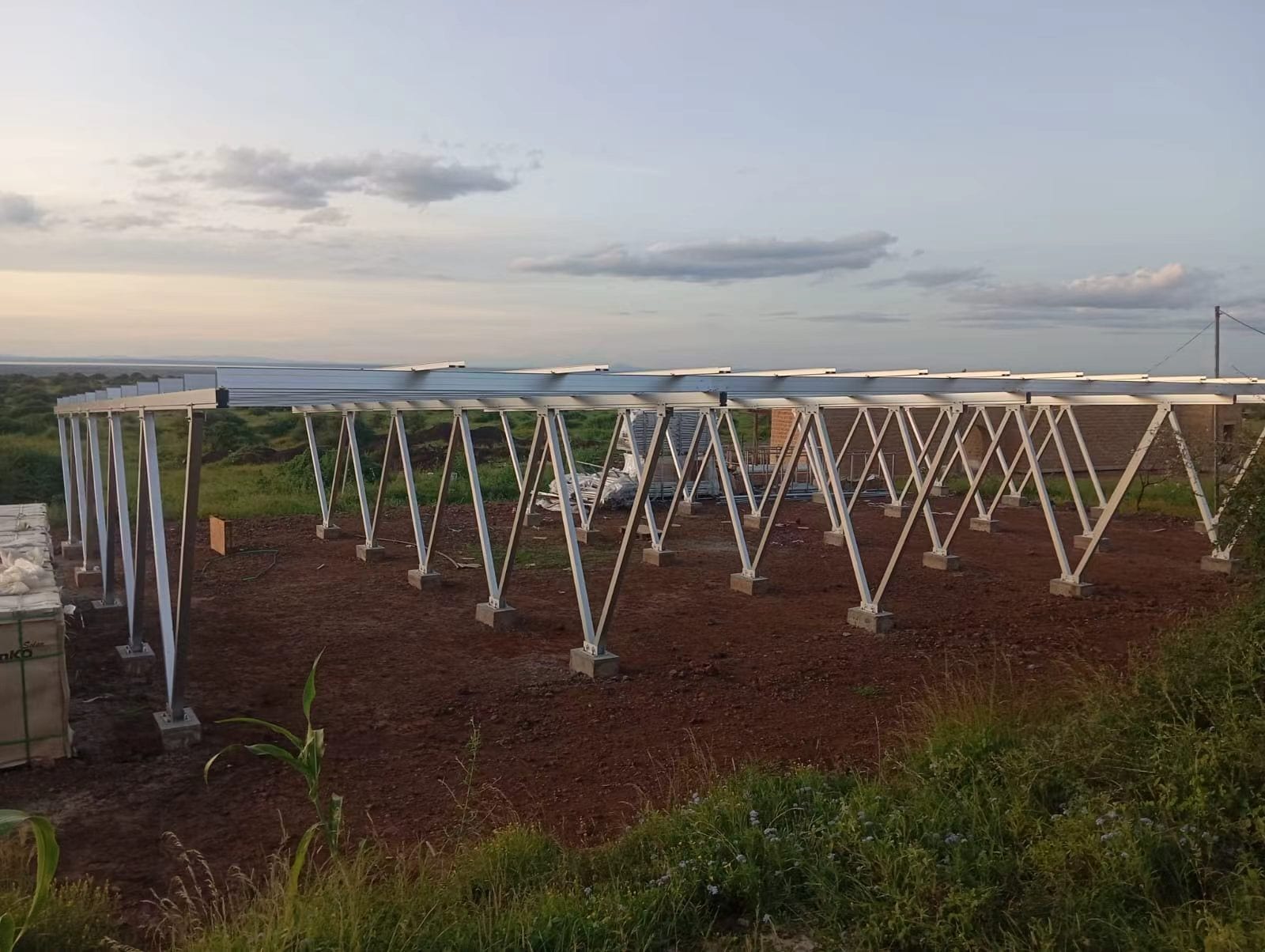
- Ground mount: Best for open land, carports, and large yields. Allows optimal tilt and spacing. Can use driven piles, concrete ballasts, or screw foundations depending on soil.
- Roof mount: Best for warehouses, factories, and homes. Must respect roof load limits, membrane warranties, and existing penetrations. Usually the lower-cost option when the roof is already there.
2. Aluminum vs Steel
Both materials are excellent; they suit different jobs. Aluminum (typically AL6005-T5) is lighter, naturally corrosion-resistant, and needs no coating — ideal for coastal and rooftop projects where weight and rust are concerns. Structural steel (S235 / Q235B and above) delivers higher strength at lower cost per kilogram, which is why it powers most large ground mounts and carports.
| Factor | Aluminum (AL6005-T5) | Steel (S235 / Q235B) |
|---|---|---|
| Weight | Lighter | Heavier |
| Corrosion | Naturally resistant | Needs HDG / ZAM coating |
| Cost (per kg) | Higher | Lower |
| Best for | Coastal, rooftop | Utility-scale, carports |
A common, cost-optimized hybrid: steel for the primary structure and aluminum for clamping rails that touch the modules — the best of both worlds.
3. Ballasted vs Penetrating
For roof systems especially, you must decide whether to penetrate the roof. Ballasted systems use concrete or polymer weights and avoid drilling, preserving membrane warranties — but they add significant dead load and can be vulnerable in high wind unless engineered with wind deflectors. Penetrating (fixed-rail) systems bolt through the roof into structure, offering a lighter, lower-profile hold that is excellent in hurricane zones when flashed correctly.
- Ballasted: No roof penetrations, faster install, but heavier and wind-sensitive.
- Penetrating: Lighter, wind-tough, but requires careful flashing and roof compatibility.
4. Wind, Snow & Corrosion Loads
Never size a mount on a sunny day. Your system must be engineered for the worst the site will throw at it: design wind speed (many regions exceed 150 km/h, deserts and coastlines far more), snow load, and seismic factors. Coastal and industrial sites demand higher corrosion protection — hot-dip galvanizing (HDG), ZAM, or anodized aluminum. Always match the specification to the local building code and the project's warranty period.
5. Certifications & Quality
For international projects, certifications are not paperwork — they are your proof the system is safe and insurable. Look for ISO 9001 manufacturing, CE marking under EN 1090 for structural steel, and independent verification (e.g., SGS). Reputable suppliers provide load calculations, material mill certificates, and installation drawings rather than just a price per watt.
Conclusion
There is no single "best" mounting system — only the best fit for your site, climate, and economics. Start from location (ground or roof), then material (aluminum or steel), then attachment (ballasted or penetrating), and always engineer for the worst-case load. When in doubt, lean on a manufacturer that can hand you calculations and certificates, not just catalog pages.
Need help specifying your mounting system?
Our engineering team supports installers and EPCs worldwide with OEM/ODM solutions, fast quotes, and technical drawings.
🟢 Request a Free Quote